May 24, 2026
Still building.
Sometimes I wonder, how did I get here? I spent over a decade in tech — evolving from a West Virginia kid into a “badass engineer at Twitter” (to quote a friend). Then I became a mom, burned out, and walked away. That was two years ago.
My son was born in October 2023. I returned to work that February, exhausted. He was a terrible sleeper — 1.5-hour stretches, night after night. By six months, we’d hit a breaking point. I took a month of unpaid leave. We sleep-trained. We finally slept.
But for me, the damage was done. I never went back. I needed a longer break, to heal. I took the rest of 2024 off. I read a lot of books, meditated, made mom-friends, got back into half-marathon shape, and learned how to be a mom. It was a good year.
January 1, 2025 rolled around, and I started looking for work. Within hours of posting on LinkedIn, recruiters were in my DMs. Big companies. Jobs pre-baby Kaitlyn would have been thrilled to take. I talked to them. I prepped for interviews.
The day before my first interview with a FAANG company, I bailed.
I didn’t feel like myself. I felt, deeply, that I was going to fail. But also, something had shifted. I didn’t want it like I used to. The life I’d built that year was hard, but it was a good life. It was sustainable. We had enough. I didn’t want to spend 40+ hours a week away from my kid, if I didn’t have to. But I also didn’t want to give up my career — something I’d fought for for a long time. From a small town in West Virginia to Twitter. I wanted to throw up. I decided I’d look for part-time work instead, or a schedule where I could start at 5am and finish by 1pm. Why couldn’t I have it all?
2025 was a challenging year, but a necessary one in my plot development. The day after I cancelled that interview, I signed up for the Marine Corps Marathon. Even saying no to being the “badass engineer,” I was still chasing external validation. I thought if I could post a killer marathon time on LinkedIn, people from my old life would see I was still me — still complex, still driven, still more than a stay-at-home mom.
I pushed my body past its limit. It was screaming at me that running 20 miles on the treadmill at 4am and then heading straight to a playdate — no stretching, granola bar in hand — was NOT GOOD. STOP, KAITLYN! I didn’t listen. I showed up to the race in October and only made it to mile 12 before my body completely quit.
I realized somewhere in that race that I wasn’t running it for myself. I was running it for everyone else. Anyone who’s run such a distance knows, it’s difficult to do for the wrong reasons.
It felt a little dark after that. I’d also been job-searching the whole time, and failed an interview for one of the only flexible full-time jobs I could find. My sleep was terrible. I came away from marathon training with an injured knee and foot. I still couldn’t disentangle my self-worth from work.
Somewhere in there I also had to sit with the fact that these were, by any honest measure, first-world problems. I have a supportive partner, a healthy kid, savings, a career I could theoretically walk back into. I’m extremely fortunate to even have these choices. But this was what I was struggling with — and I’ve learned that small problems can feel big in the right circumstances. Everyone’s journey is different, and difficult for different reasons.
Then 2026 came, and a few things shifted.
We joined a cooperative preschool — about nine guaranteed hours a week for me. It put me around other parents making similar choices for their families. Some pieced together part-time work. Some didn’t have a choice. Some worked full time, flexible jobs. Each had a different story. It gave me perspective and empathy, and reminded me we’re all struggling through parenthood together. For the first time, I didn’t feel like I had to explain myself.
I also read two books that landed hard: The Power Pause by Neha Ruch, and The Good Enough Job by Simone Stolzoff.
Stolzoff names the American culture of “workism” — and finally having a name for the pressure I’d felt pushing against my choices was freeing. He also writes about how one of the biggest predictors of longevity and happiness isn’t a successful career, but having many different sources of meaning and worth. Career can be one of them. It shouldn’t be all of them. Running, cooking, reading, writing — those were parts of me too. Being a software engineer was a part too, but it had nothing to do with where I worked, what my title was, or how much I made.
Ruch’s book reframed the time. Embrace it. Experiment. Build the blog you’ve always wanted. Start the photography business. But do it without the pressure of it needing to work out.
That reframe let me heal.
And then AI exploded.
I’d felt the slow creep of AI into my everyday life as a SAHM. I knew it was coming — but like most people, I had a hard time seeing its full potential or keeping up with the pace.
Then I started hearing about Claude Code. Everyone was talking about it. How powerful it was. How it would replace software engineers. How no one needed to code anymore. I started getting LinkedIn requests from random AI training companies to audit Swift code. At the same time, the big tech recruiters stopped reaching out.
What was happening? Was this the end of my career — or the beginning of something new? The skills I’d built over a decade had suddenly become outdated. Maybe I could build something? Did I even have a choice? If I didn’t do this, I might actually lose my identity as a software engineer. I didn’t want that.
For years I’d had dozens of ideas. Maybe I could just build one for myself, for my son, for my family? Like Ruch wrote — what might you build when there’s no pressure for it to work out? All of it together was a catalyst. I could be a builder again. Maybe I could be a builder on my own terms for the first time in my career. Maybe my career wasn’t over. Maybe I needed to quit, spend two years at home, to realize that.
So I started. Claude Code. Agents. All of it. After the first weekend, I was sold. It was beautiful. It was crazy. It felt like flying. I built the iOS app, the image pipeline, and the payment flow alone in three weeks. As a software engineer, I’d always preferred to live in the space of creation rather than argue about coding conventions. This let me get into that space and soar.
I wanted to build an app to help people manage type 1 diabetes (which I’ve had since I was 15) — but it was clear I needed to master this new skill before diving into something that important. So I built Colorín — a coloring sheet generator, for the kids in my life who kept asking for sheets that didn’t exist.
I wrote this a few weeks into the project, in a LinkedIn post I never published (because sharing on the internet still terrifies me):
My son, Leo, loves to color. His requests for coloring sheets got more and more complicated — so I built him an app. Now he can ask for “an excavator playing a violin” or “a cat eating sushi” (real examples).
I just wanted to share, because as an iOS engineer turned accidental full-time parent, building this app with AI during nap times and early mornings has felt like soaring. So freeing. I don’t know where AI is headed, but as an engineer who’s always delighted in the product, the architecture, the high level — writing this silly little coloring book app has brought me the most joy of any project in my career.
Does this app need to exist? Probably not. Are there others that do the same thing? For sure. Do I care? Not really. The point was to learn about AI and reinvigorate my love for software (which had definitely dwindled over 13 years since I built my first app). And I 100% succeeded.
So here I am. For the first time in my career, I feel like I have a lot to say. A lot to share. A lot to contribute.
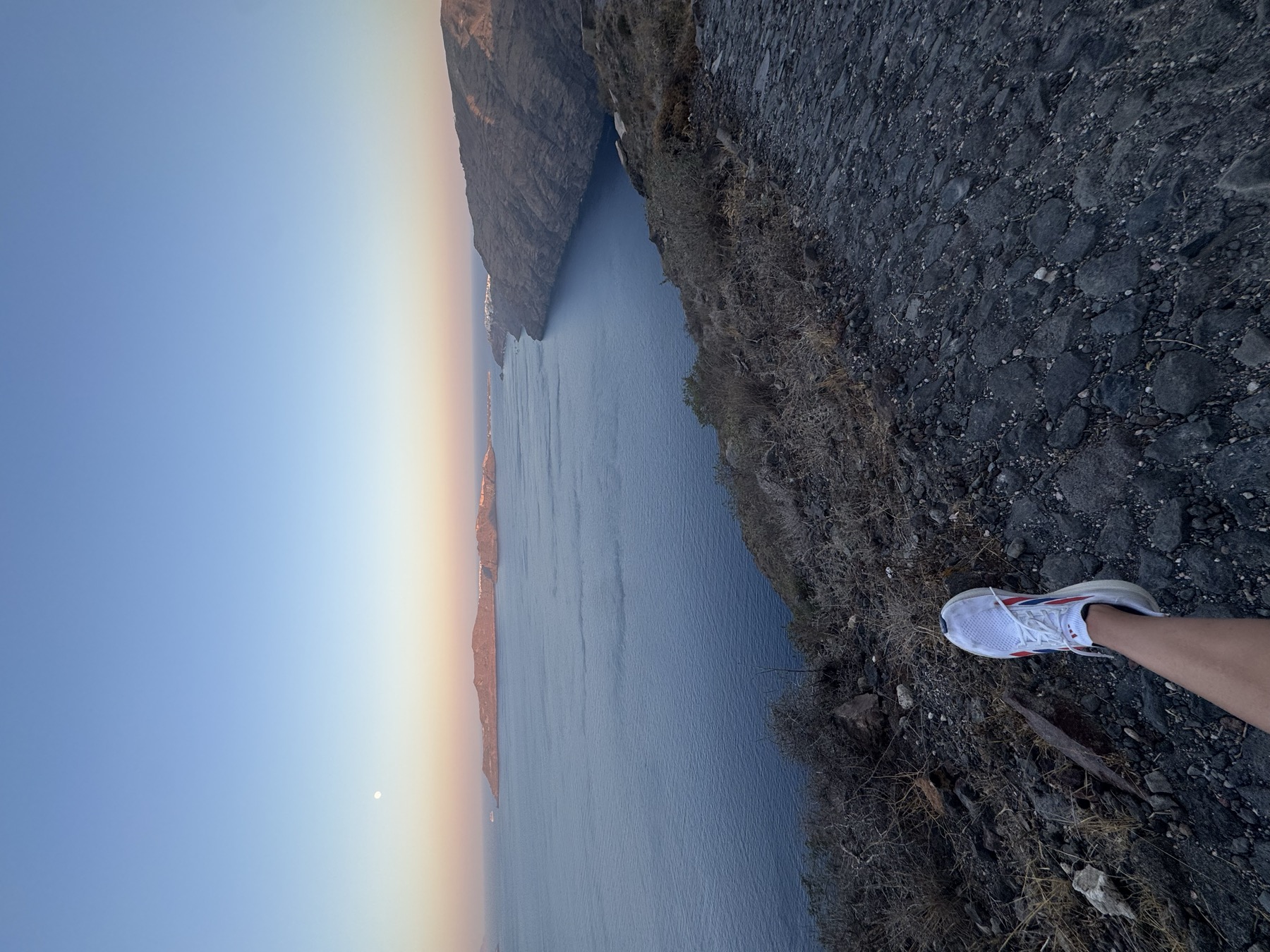
So I founded Kaldra. It’s a real LLC, registered in Virginia. It was important to me to start something real — to give myself the accountability to treat this venture like a business. It also unlocks my own path to part-time work. The name comes from the caldera in Santorini. Last summer we took a family trip to Greece, our second time there. Early one morning, before anyone was awake, I ran the entire length of the caldera — from Imerovigli to Oia and back. Halfway, I stopped, totally alone, and stared out at the boats, so small they looked like feathers floating out to the open sea. In that moment, I had the distinct feeling that I could do anything.
I want to ship as many apps as I can in 2026 — I’ve set myself a goal of 5. We’ll see where it takes me.
And if you’re staying home too? Consider building something. You never know where it will take you when no one is watching. But more than that — as humans, we like to contribute. To build. To create. Taking time away from your career can feel like failure in a society that values it (which is a strange way to think about it, because what’s more important than raising a kid?). But your identity can get absorbed into that. Building something of your own gives you space to solidify it. To build your life portfolio of things that make you whole. Being a parent is important. Being a worker is important. But there’s more. And there’s no better time to explore than early mornings, late nights, and nap times.
Somehow, after all of this, I feel whole again (until the next sleep regression).